Choosing the right powder supplement manufacturer is critical because it directly affects product quality, regulatory compliance, costs, and your nutrition brand’s performance in the supplements market. Gym owners, influencers, and entrepreneurs rely on a dietary supplement manufacturer to produce safe, consistent nutritional supplements that meet customer expectations, U.S. Food and Drug Administration (FDA) requirements, and industry standards.
A poor manufacturing partner can lead to quality issues, labeling problems, production delays, or products that fail to meet specifications. The right contract manufacturer, by contrast, supports brand credibility, cost-effective production, operational efficiency, and long-term business growth by helping supplement brands deliver high-quality products to customers.
What Does A Powder Supplement Manufacturer Actually Do?
A powder supplement manufacturer manages the entire supplement manufacturing process, including powder manufacturing, production, testing, packaging, and labeling of dietary supplements. They help brands develop powder products by sourcing raw materials, formulating powders, and ensuring each product meets quality, safety, and compliance specifications.
They also oversee the entire process to ensure each powder product meets labeling, quality assurance, and regulatory requirements before it reaches the market. This end-to-end responsibility helps brands produce supplements that meet customer expectations across different sales channels.
Core Functions: Formulation, Blending, and Testing
A powder supplement manufacturer manages core capabilities that turn a concept into a finished powder product. Formulation focuses on custom formulas and supplement development; blending ensures even ingredient distribution, and flavor systems support consistent taste profiles.
Filling and manufacturing packaging prepare supplements for direct shipping and retail. At the same time, rigorous quality control, testing, and quality assurance ensure products meet good manufacturing practices, FDA standards, and internal specifications. These steps work together to support high-quality dietary supplements across sports nutrition and general health categories.
What To Look For In A Powder Supplement Manufacturer
Essential criteria help founders screen manufacturers early and avoid costly mistakes before comparing pricing or timelines. These criteria focus on compliance, transparency, facilities, and operational stability rather than marketing claims.
Using objective criteria allows supplement brands to compare manufacturers fairly, reduce risk, and choose a trusted partner with extensive industry experience, in-house expertise, and the ability to provide high-quality products at scale.
Required Certifications (cGMP, NSF, ISO)
| Certification | What It Means | Why It Matters For Founders |
|---|---|---|
| cGMP (Current Good Manufacturing Practices) | Baseline FDA requirements for how dietary supplements must be manufactured, tested, handled, produced, and labeled | Helps reduce contamination, mix-ups, and production errors while supporting rigorous quality control and consistent product quality |
| NSF International (NSF) | Third-party certification involving facility audits, product verification, and testing | Confirms nutritional supplements are produced as claimed and facilities meet the defined quality standards expected from a top dietary supplement manufacturer |
| ISO (International Organization for Standardization) | Quality management system standards focused on documentation, process control, and efficiency | Signals repeatable, monitored processes that support long-term consistency, compliance, and scalable production |
A powder supplement manufacturer should, at a minimum, meet cGMP requirements to produce dietary supplements legally. NSF and ISO certifications provide assurance to brands focused on contract manufacturing, custom formulations, sports nutrition, and high-quality supplement manufacturing.
How Certifications Protect Your Brand
| Area Of Risk | How Certifications Help |
|---|---|
| Batch consistency | Require documented, repeatable powder manufacturing and supplement manufacturing processes |
| Labeling accuracy | Enforce checks that reduce mislabeling and specification errors |
| Quality control | Mandate testing, records, corrective actions, and in-house quality systems |
| Compliance issues | Lower the risk of avoidable FDA-related regulatory problems |
Together, these certifications demonstrate that manufacturing processes are documented, monitored, and repeatable, helping ensure each product meets specifications and supports brand credibility in the market.
Facility Transparency and Willingness To Offer Site Tours
Facility transparency shows whether a supplement manufacturer maintains direct control over production, packaging, and quality systems. Willingness to provide virtual or onsite tours gives founders direct access to facilities, equipment, and the manufacturing team.
Tours help verify cleanliness, workflow organization, staffing, and whether powders are produced in-house or outsourced. Manufacturers that offer transparency and direct access often demonstrate stronger commitment, accountability, and long-term reliability.
Tenure, Ownership Stability, And Regulatory Track Record
Tenure and ownership stability indicate whether a supplement manufacturer has extensive industry experience and consistent leadership. A clean regulatory track record with no unresolved FDA issues reduces risk and supports long-term brand trust.
Manufacturers with stable ownership are more likely to invest in facilities, employee training, production efficiency, and quality systems that support scalable growth and reliable output.
How Pricing And MOQs Work For Powder Supplements
Pricing and Minimum Order Quantities reflect the real costs of powder manufacturing and contract manufacturing services. Understanding MOQs helps founders plan production volumes, budgets, and timelines while balancing cost-effectiveness and quality.
MOQs are influenced by batch size, equipment setup, testing requirements, packaging specifications, and production efficiency. Higher volumes often improve unit economics, while smaller batches may increase costs.
Key Cost Drivers In Powder Supplements
Premium ingredients, advanced flavor systems, additional testing, and packaging may increase upfront costs, but they often improve product stand, customer satisfaction, and long-term brand value.
| Cost Area | What Impacts Cost |
|---|---|
| Ingredients (Raw Materials) | Ingredient quality, sourcing, and specialty inputs |
| Flavor Systems | Standard vs. custom flavors, taste development |
| Testing Depth | In-house testing, third-party testing, stability checks |
| Labeling | Label design, regulatory review, revisions |
| Manufacturing Packaging | Bottles, pouches, scoops, seals |
| Production Volume | Batch size and run frequency |
| Product Types | Powders produced alongside capsules, tablets, or liquid products |

Red Flags And Disqualification Triggers To Watch For
Red flags signal when a powder supplement manufacturer should be disqualified before signing a supplement contract. These triggers protect product quality, customers, and brand reputation. Early identification of issues helps founders avoid compliance risks, production delays, and costly rework caused by weak systems or limited transparency.
Regulatory Violations, Recalls, And FDA Warning Letters
Regulatory violations, recalls, or FDA warning letters indicate gaps in compliance, documentation, or quality control within a manufacturer’s operations. These issues suggest the manufacturer may struggle to consistently produce supplements that meet safety, labeling, and manufacturing standards required in regulated health markets.
Repeated or unresolved violations are especially concerning because they often indicate systemic issues rather than isolated mistakes. Issues such as poor recordkeeping, inadequate testing, or insufficient employee training can persist over time if not adequately addressed. For brands, working with a manufacturer with unresolved compliance issues increases the risk of product delays, forced recalls, reputational damage, and loss of customer trust.
Inconsistent Communication Or Documentation
Inconsistent communication or refusal to provide certifications, test results, or compliance records signals operational risk. A reliable manufacturer communicates clearly, responds promptly, and provides documentation when requested. Poor communication may indicate disorganization, limited in-house expertise, or a lack of readiness to support long-term clients.
When questions go unanswered or timelines keep shifting, it becomes difficult to plan production, launches, or inventory. Clear communication is especially important during formulation changes, testing updates, labeling reviews, and production scheduling. Manufacturers that struggle here often create delays, misunderstandings, and avoidable errors that can affect product quality and customer trust.
Outsourcing Without Disclosure (Shadow Manufacturing)
Outsourcing without disclosure limits visibility into how supplements are produced and controlled. A trustworthy contract manufacturer clearly explains whether production is handled in-house or by another facility, along with the reasons and safeguards in place.
Undisclosed outsourcing can introduce inconsistencies in quality control, testing standards, and documentation practices. Founders should understand who is responsible for manufacturing, where products are produced, and how quality is maintained across facilities. Transparency in this area helps protect compliance, brand reputation, and long-term scalability.

Final Checklist For Success
Choosing the right powder supplement manufacturer requires clear criteria, careful evaluation, and documented proof before committing. Focusing on certifications, facilities, experience, pricing transparency, and compliance systems helps reduce risk and protect your brand.
Use this checklist as a practical decision tool. Strong due diligence and clear expectations help you choose a trusted partner that can produce high-quality dietary supplements, support business growth, and serve customers reliably.
Frequently Asked Questions
What certifications should a powder supplement manufacturer have?
A powder supplement manufacturer should follow cGMP and may also hold NSF International or ISO certifications, as well as FDA registration.
How long does it take to manufacture a powder supplement?
Powder supplement manufacturing typically takes several weeks to a few months, depending on formulation, testing, packaging, and production volume.
What is the minimum order quantity for powder supplements?
Minimum order quantities vary by manufacturer and formula and are influenced by batch size, packaging, and testing requirements.
How much does it cost to manufacture powder supplements?
Costs depend on raw materials, flavor systems, testing, packaging, and order size, so pricing varies by specifications.
What questions should I ask a manufacturer before signing a contract?
Ask about certifications, quality assurance processes, ingredient sourcing, MOQs, timelines, pricing transparency, and whether production is handled in-house.
References
- International Alliance of Dietary/Food Supplement Associations. (n.d.). Global guide to good manufacturing practice for supplements. IADSA. Retrieved December 19, 2025, from https://www.iadsa.org/global-guide-to-good-manufacturing-practice-for-supplements
- International Alliance of Dietary/Food Supplement Associations. (n.d.). Stability testing for shelf life determination of supplements. IADSA. Retrieved December 19, 2025, from https://www.iadsa.org/stability-testing-for-shelf-life-determination-of-supplements
- National Institutes of Health, Office of Dietary Supplements. (2023, January 4). Dietary supplements: What you need to know (Fact sheet for consumers). Office of Dietary Supplements. https://ods.od.nih.gov/factsheets/WYNTK-Consumer/
- National Institutes of Health, Office of Dietary Supplements. (2020, March 11). Background information: Dietary supplements (Fact sheet for consumers). Office of Dietary Supplements. https://ods.od.nih.gov/factsheets/DietarySupplements-Consumer/
- NSF. (n.d.). NSF certification: Ensuring quality and safety standards. NSF. Retrieved December 19, 2025, from https://www.nsf.org/certification
- NSF. (n.d.). Dietary supplements and nutritional products. NSF. Retrieved December 19, 2025, from https://www.nsf.org/nutrition-wellness/dietary-supplements-nutritional-produ
Supplement formulation takes a simple idea and turns it into a workable dietary supplement. That idea becomes a finished product by choosing ingredients that support the goal and work well together. The formula must also meet Food and Drug Administration (FDA) guidelines. Many new founders feel overwhelmed by the details, but with a clear process and a communicative manufacturer, formulation becomes much easier to manage.
What Does “Supplement Formulation” Mean For A New Brand?
For a new brand, supplement formulation is the phase where your idea becomes a formula that a manufacturer can actually produce. This stage sets the tone for quality, price, compliance, and how your supplement fits into the market. If the foundation is solid, the rest of the process, from packaging to planning future product lines, falls into place.
What Happens During The Formulation Phase?
During formulation, your team reviews the concept, the competitive landscape, available research, and the needs of your audience. You also look at ingredient compatibility, dosage ranges, testing requirements, and early regulatory guidelines. This early groundwork supports a consistent formula and helps keep the development process aligned with FDA expectations.
What Decisions Must Founders Make Early On?
Founders need to settle on the product’s purpose, preferred format, flavor, dosage range, and price point at the start. These early choices reduce back-and-forth later and make it easier for the manufacturer to provide realistic timelines and cost estimates.

What Questions Should You Answer Before Formulating?
Before you begin developing a dietary supplement formula, it helps to clarify your goals so you can create a unique product that fits your market and stays within regulatory compliance. Answering these questions early helps your team avoid beginner mistakes, plan your supplement formulation strategy, and work more efficiently with your supplement manufacturer.
What Problem Is Your Product Trying To Solve?
Your product should solve a clear need for your intended customers. Identifying that need guides every part of your supplement formulation. Once you define the core problem, it becomes easier to shape your dietary supplement formula. You can also choose key ingredients, plan product positioning, and stay aligned with regulatory compliance throughout development.
- What specific needs or challenges does your target audience want addressed?
- Is your product meant to support energy, sports nutrition, digestion, sleep, or general health?
- How will your solution offer benefits without crossing into claims or medical promises?
- Does solving this problem give your brand a competitive edge in the supplement industry?
What Format Works Best For Your Audience And Use Case?
The best format for your audience depends on how they prefer to take a dietary supplement and how your key ingredients perform in different delivery forms. Your choice between capsules, gummies, powders, or liquids affects taste, dose, ingredient stability, pricing, packaging, your supplement facts panel, and even the lead time needed for production.
- Capsules (simple dosing, fast production)
- Gummies (taste-first, higher cost, more complex formulation)
- Powders (flexible dosing, sports nutrition friendly)
- Liquid (quick absorption, more packaging considerations)
How Does Your Target Price Influence Ingredient Choices?
Your target price directly shapes which ingredients you can use in your supplement formulation because it determines whether your dietary supplement formula can include premium components or must stay within a more cost-controlled range. Clear pricing goals also help you balance product development costs, manufacturing needs, and the level of scientific expertise and efficacy you want your final product to reflect.
- Does the price point allow for premium key ingredients or more basic options?
- Will consumers pay more for scientific expertise, custom formulation, or added efficacy?
- How will ingredient pricing impact your overall product development and manufacturing costs?
- Does your chosen dose make the formula more expensive than planned?
What Compliance Basics Should You Prepare?
Strong regulatory compliance also ensures you have the right documentation ready for testing, quality checks, and future product development steps. Understanding compliance early supports product safety and keeps your marketing honest while protecting your brand during production and launch. Regulatory compliance also shapes the documentation your team will need later.
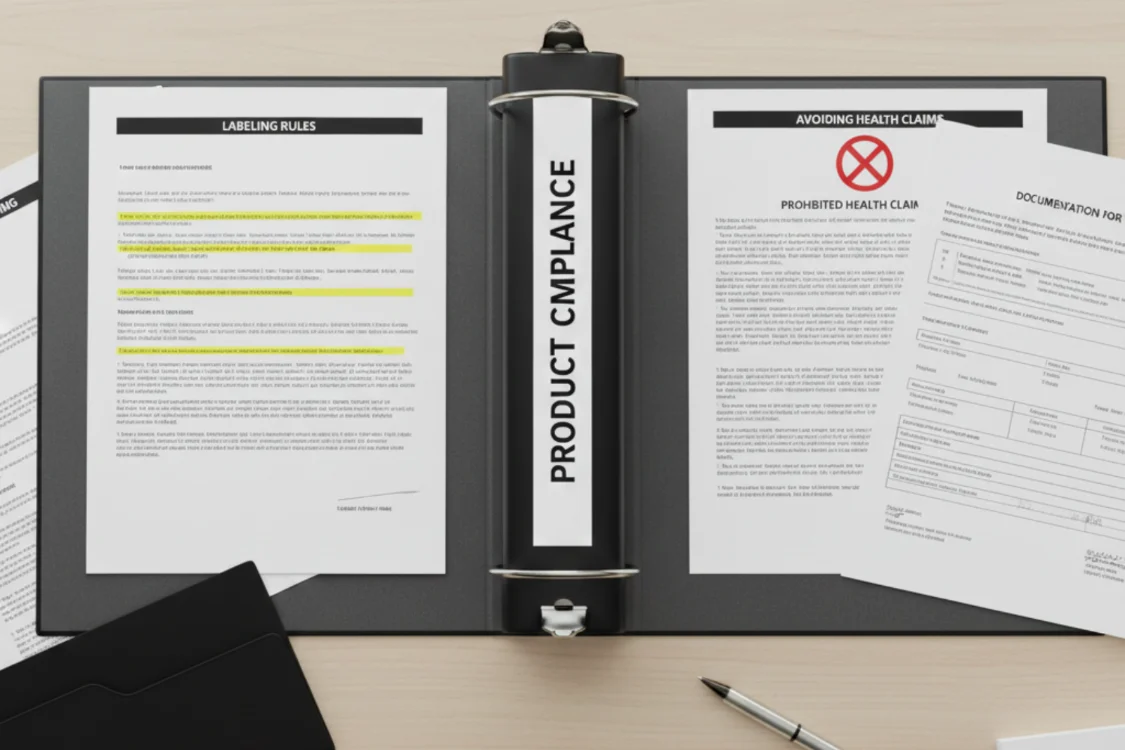
- Avoid claims and stick to general health benefits.
- Follow high-level labeling rules for your supplement facts panel and packaging.
- Keep documentation organized for testing, quality assurance, and any future clinical trials.
What Are The Steps In Supplement Formulation?
The steps in supplement formulation include defining your product’s purpose, selecting evidence-based ingredients, checking how those ingredients interact, choosing safe and effective dosages, confirming the formula meets FDA guidelines, and preparing a version your manufacturer can produce consistently. A significant part of this process is choosing the right ingredients.
How Do Formulators Choose Safe, Compatible Ingredients?
Formulators review scientific research, check ingredient interactions, confirm regulatory compliance, and select dosages that support the product’s goal without making medical claims. They also consider customer needs, market trends, and how each ingredient contributes to the formula’s overall purpose, ensuring the final blend is both safe and aligned with your brand.
How Are Prototypes Created And Tested?
Prototypes are created by turning your chosen supplement formula into early samples that can be tested for taste, texture, solubility, and overall quality. Testing ensures the formula is stable, well-designed, and ready for iterative improvements before moving to full-scale dietary supplement development.
What Shapes Your Supplement Formula?
Factors like stability, taste, solubility, and dose shape your supplement formula. These elements determine how well the product performs, how it feels to consumers, and whether it stays shelf-stable during storage and shipping. They also influence which ingredients you can use, how those ingredients interact, and whether the formula works best as a capsule, powder, liquid, or another format.
How Are Quality and Compliance Checked?
Quality and compliance are checked by confirming ingredient identity, verifying raw materials, reviewing supplement facts requirements, and ensuring all documentation meets regulatory and safety standards. These steps keep the formulation aligned with industry guidelines and help confirm accuracy before manufacturing begins.

Common Formulation Mistakes And How To Avoid Them
The most common supplement formulation mistakes happen when brands rush the dietary supplement development process and overlook key steps that protect quality, regulatory compliance, and the claims of effectiveness of the final product. Avoiding these errors helps you maintain proper formulation, stay aligned with FDA regulations, and create a supplement that stands out in a crowded market.
- Starting formulation without a clear product goal
- Choosing trending ingredients without evaluating supply risk
- Misjudging dosage, taste, or solubility
- Ignoring early regulatory and labeling requirements
- Pairing with a manufacturer who doesn’t meet compliance basics
How Long Does Supplement Formulation Usually Take?
Supplement formulation usually takes several weeks to several months because the process includes market analysis, research, ingredient selection, prototype creation, testing potential safety, and regulatory compliance checks before the final product moves into manufacturing. The exact timeline depends on your supplement manufacturer, the complexity of the formula, market requirements, and how quickly your team makes decisions during development.
Typical Timeline Breakdown (Concept → Prototype → Approval)
A typical dietary supplement development timeline follows several steps:
Concept development (1–2 weeks):
Your team defines the formula, target audience, product positioning, specific needs, and competitive edge using market analysis and scientific expertise.
Ingredient selection + prototype creation (3–6 weeks):
Formulators choose key ingredients based on research, efficacy, market trends, and safety guidelines under FDA regulations. Early prototypes may vary depending on whether you’re creating capsules, powders, sports nutrition blends, or other formats.
Testing and quality assurance (2–4 weeks):
Testing ensures proper formulation by checking taste, dose accuracy, stability, solubility, and other effects between ingredients. Regulatory experts review compliance requirements, supplement facts accuracy, and documentation.
Final approval + production prep (1–2 weeks):
Your team reviews packaging, pricing, clinical trials documentation (if planned later), and any formula adjustments before manufacturing begins.
What Slows Down Timelines (And How To Prevent Delays)?
Timelines slow down when ingredient selection changes repeatedly, when supply issues affect key ingredients, or when brands skip early regulatory compliance steps. Delays also happen when formula revisions pile up, when product goals shift mid-process, or when clients take too long to approve prototypes.
You can prevent delays by starting with a complete and clear dietary supplement formula, defining dosage needs early, choosing a supplement manufacturer with a clean regulatory record, and working closely with a team that offers strong support in research, testing, quality assurance, and production.
Staying aligned with earlier sections, especially around custom formulation decisions, proper formulation, and understanding several factors that influence development, helps your product meet the highest standards without extending your lead time.
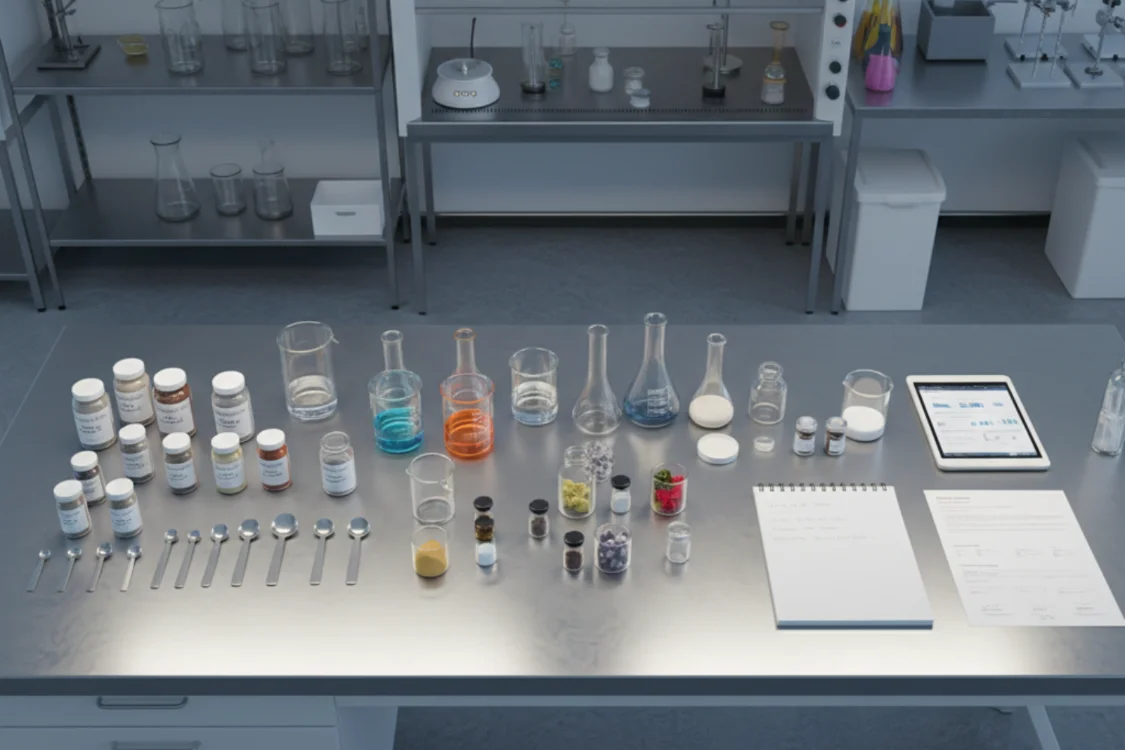
Start Your Supplement Formulation The Right Way
Supplement formulation is manageable when you follow a clear structure and understand each part of dietary supplement development, from ingredient selection to regulatory compliance. With solid research, strong quality assurance, and support from a reliable supplement manufacturer, you can create a dietary supplement formula that meets FDA regulations and stands out in the supplement industry.
Choosing the right partner is just as important as selecting the right key ingredients. This is why pre-qualification criteria, like scientific expertise, clean compliance records, and transparent operations, protect your formula, lead time, and final product.
If you’re unsure where to begin, start with the basics: define your product goal, your target audience, and your target price. These early decisions help ensure proper formulation, guide product positioning, and make developing a unique product far easier and more predictable for your brand, your customers, and your long-term success.
Frequently Asked Questions
What is supplement formulation?
Supplement formulation is the process of creating a safe, effective dietary supplement formula by choosing key ingredients, checking regulatory compliance, and preparing the final product for manufacturing.
How much does supplement formulation cost for small brands?
Supplement formulation cost varies, but small brands often spend a few thousand dollars depending on ingredient selection, scientific expertise, testing needs, and the complexity of the supplement formula.
How long does supplement formulation take?
Most supplement formulation timelines range from a few weeks to a few months based on concept development, prototype testing, quality assurance steps, and FDA regulations.
Do I need a formulation partner, or can I start with private label?
You can start with a private label for speed, but a formulation partner helps you create custom supplements with proper formulation, better product positioning, and stronger long-term success.
What qualifications should a supplement manufacturer have?
A good supplement manufacturer should follow cGMP, meet FDA regulations, hold certifications like NSF or ISO, offer strong quality assurance, and provide transparent support throughout dietary supplement development.
References
- Bailey, R. L., Dodd, K. W., Gahche, J. J., Dwyer, J. T., Cowan, A. E., Jun, S., Eicher-Miller, H. A., Guenther, P. M., Bhadra, A., Thomas, P. R., Potischman, N., Carroll, R. J., & Tooze, J. A. (2019). Best Practices for Dietary Supplement Assessment and Estimation of Total Usual Nutrient Intakes in Population-Level Research and Monitoring. The Journal of Nutrition, 149(2), 181–197. https://doi.org/10.1093/jn/nxy264
- Bailey R. L. (2020). Current regulatory guidelines and resources to support research on dietary supplements in the United States. Critical reviews in food science and nutrition, 60(2), 298–309. https://doi.org/10.1080/10408398.2018.1524364
- Harvard T. H. Chan School of Public Health. (2024). Dietary supplements. The Nutrition Source. https://nutritionsource.hsph.harvard.edu/dietary-supplements/
- National Institutes of Health, Office of Dietary Supplements. (2020, March 11). Background information: Dietary supplements. https://ods.od.nih.gov/factsheets/DietarySupplements-Consumer/
- Office of Dietary Supplements. Dietary Supplements: What You Need to Know — Fact Sheet for Consumers. National Institutes of Health. Updated January 4, 2023.https://ods.od.nih.gov/factsheets/WYNTK-Consumer/
- Pasiakos, S. M., & Kuszak, A. J. (2025). Strengthening Dietary Supplement Research: An Expanded Priority for the NIH Office of Dietary Supplements. The American journal of clinical nutrition, 121(6), 1217–1219. https://doi.org/10.1016/j.ajcnut.2025.04.001