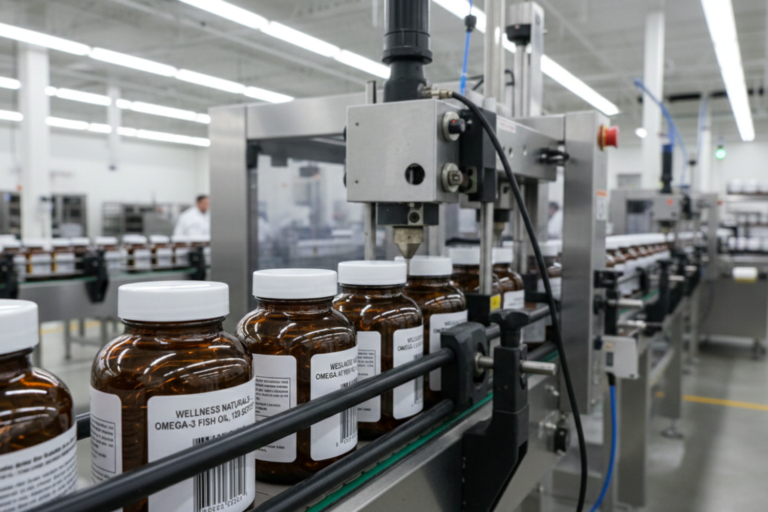
Choosing the right powder supplement manufacturer is critical because it directly affects product quality, regulatory compliance, costs, and your nutrition brand’s performance in the supplements market. Gym owners, influencers, and entrepreneurs rely on a dietary supplement manufacturer to produce consistent, quality-tested nutritional supplements that meet customer expectations, U.S. Food and Drug Administration (FDA) requirements, and industry standards.
A poor manufacturing partner can lead to quality issues, labeling problems, production delays, or products that fail to meet specifications. The right contract manufacturer, by contrast, supports brand credibility, cost-effective production, operational efficiency, and long-term business growth by helping supplement brands provide high-quality products to customers.
What Does a Powder Supplement Manufacturer Do?
A powder supplement manufacturer helps you turn raw materials and custom formulations into a finished powder product through a controlled manufacturing process. They typically handle powder manufacturing, blending, testing, packaging, and labeling, with quality assurance and rigorous quality control steps to help ensure each batch meets your specifications. Many also offer contract manufacturing, meaning they produce the supplement for your brand while following good manufacturing practices.
What To Look For In A Powder Supplement Manufacturer
Essential criteria help founders screen manufacturers early and avoid costly mistakes before comparing pricing or timelines. These criteria focus on compliance, transparency, facilities, and operational stability rather than marketing claims.
Using objective criteria allows supplement brands to compare manufacturers fairly, reduce risk, and choose a trusted partner with the right experience, systems, and capabilities to scale.
1. Required Certifications (cGMP, NSF, ISO)
| Certification | What It Means | Why It Matters For Founders |
|---|---|---|
| cGMP (Current Good Manufacturing Practices) | Baseline FDA requirements for how dietary supplements must be manufactured, tested, handled, produced, and labeled | Helps reduce contamination, mix-ups, and production errors while supporting rigorous quality control and consistent product quality |
| NSF International (NSF) | Third-party certification involving facility audits, product verification, and testing | Can provide third-party verification of facility or product standards, depending on the NSF program |
| ISO (International Organization for Standardization) | Quality management system standards focused on documentation, process control, and efficiency | Signals repeatable, monitored processes that support long-term consistency, compliance, and scalable production |
A powder supplement manufacturer should follow FDA cGMP requirements, which are the baseline expectations for U.S. dietary supplement manufacturing. NSF and ISO certifications provide assurance to brands focused on contract manufacturing, custom supplement formulas, sports nutrition, and high-quality supplement manufacturing.

2. Facility Transparency and Willingness To Offer Site Tours
Facility transparency shows whether a supplement manufacturer maintains direct control over production, packaging, and quality systems. Willingness to provide virtual or onsite tours gives founders direct access to facilities, equipment, and the manufacturing team.
Tours help verify cleanliness, workflow organization, staffing, and whether powders are produced in-house or outsourced. Manufacturers that offer transparency and direct access often demonstrate stronger commitment, accountability, and long-term reliability.
How Pricing And MOQs Work For Powder Supplements
Pricing and Minimum Order Quantities reflect the real costs of powder manufacturing and contract manufacturing services. Understanding MOQs helps founders plan production volumes, budgets, and timelines while balancing cost-effectiveness and quality.
MOQs are influenced by batch size, equipment setup, testing requirements, packaging specifications, and production efficiency. Higher volumes often improve unit economics, while smaller batches may increase costs.

Red Flags And Disqualification Triggers To Watch For
Red flags can indicate a powder supplement manufacturer is not the right fit before you sign a supplement contract. These triggers protect product quality, customers, and brand reputation. Early identification of issues helps founders avoid compliance risks, production delays, and costly rework caused by weak systems or limited transparency.
Regulatory Violations, Recalls, And FDA Warning Letters
Regulatory violations, recalls, or FDA warning letters indicate gaps in compliance, documentation, or quality control within a manufacturer’s operations. These issues suggest the manufacturer may struggle to consistently produce supplements that meet safety, labeling, and manufacturing standards required in regulated health markets.
Repeated or unresolved violations are especially concerning because they often indicate systemic issues rather than isolated mistakes. Issues such as poor recordkeeping, inadequate testing, or insufficient employee training can persist over time if not adequately addressed. For brands, working with a manufacturer with unresolved compliance issues increases the risk of product delays, forced recalls, reputational damage, and loss of customer trust.
Inconsistent Communication Or Documentation
Inconsistent communication or refusal to provide certifications, test results, or compliance records signals operational risk. A reliable manufacturer communicates clearly, responds promptly, and provides documentation when requested. Poor communication may indicate disorganization, limited in-house expertise, or a lack of readiness to support long-term clients.
When questions go unanswered or timelines keep shifting, it becomes difficult to plan production, launches, or inventory. Clear communication is especially important during formulation changes, testing updates, labeling reviews, and production scheduling. Manufacturers that struggle here often create delays, misunderstandings, and avoidable errors that can affect product quality and customer trust.
Outsourcing Without Disclosure (Shadow Manufacturing)
Outsourcing without disclosure limits visibility into how supplements are produced and controlled. A trustworthy contract manufacturer clearly explains whether production is handled in-house or by another facility, along with the reasons and safeguards in place.
Undisclosed outsourcing can introduce inconsistencies in quality control, testing standards, and documentation practices. Founders should understand who is responsible for manufacturing, where products are produced, and how quality is maintained across facilities. Transparency in this area helps protect compliance, brand reputation, and long-term scalability.
Final Checklist For Success
Choosing the right powder supplement manufacturer requires clear criteria, careful evaluation, and documented proof before committing. Focusing on certifications, facilities, extensive experience, pricing transparency, and compliance systems helps reduce risk and protect your brand.
Use this checklist as a practical decision tool. Strong due diligence and clear expectations help you choose a trusted partner that can produce high-quality dietary supplements, support business growth, and serve customers reliably.
Frequently Asked Questions
What certifications should a powder supplement manufacturer have?
A powder supplement manufacturer should follow cGMP and may also hold NSF or ISO certifications, and be registered with the FDA as a manufacturing facility.
How long does it take to manufacture a powder supplement?
Powder supplement manufacturing typically takes several weeks to a few months, depending on custom formulas, testing, packaging, and production volume.
What is the minimum order quantity for powder supplements?
Minimum order quantities vary by manufacturer and powder formulations, and they usually depend on batch size, packaging needs, and testing requirements.
How much does it cost to manufacture powder supplements?
Costs depend on raw materials, flavor systems, testing, packaging, and order size, so pricing varies by specifications.
What questions should I ask a manufacturer before signing a contract?
Ask about certifications, quality assurance processes, ingredient sourcing, MOQs, timelines, pricing transparency, and whether production is handled in-house.
References
- International Alliance of Dietary/Food Supplement Associations. (n.d.). Global guide to good manufacturing practice for supplements. IADSA. Retrieved December 19, 2025, from https://www.iadsa.org/global-guide-to-good-manufacturing-practice-for-supplements
- International Alliance of Dietary/Food Supplement Associations. (n.d.). Stability testing for shelf life determination of supplements. IADSA. Retrieved December 19, 2025, from https://www.iadsa.org/stability-testing-for-shelf-life-determination-of-supplements
- National Institutes of Health, Office of Dietary Supplements. (2023, January 4). Dietary supplements: What you need to know (Fact sheet for consumers). Office of Dietary Supplements. https://ods.od.nih.gov/factsheets/WYNTK-Consumer/
- National Institutes of Health, Office of Dietary Supplements. (2020, March 11). Background information: Dietary supplements (Fact sheet for consumers). Office of Dietary Supplements. https://ods.od.nih.gov/factsheets/DietarySupplements-Consumer/