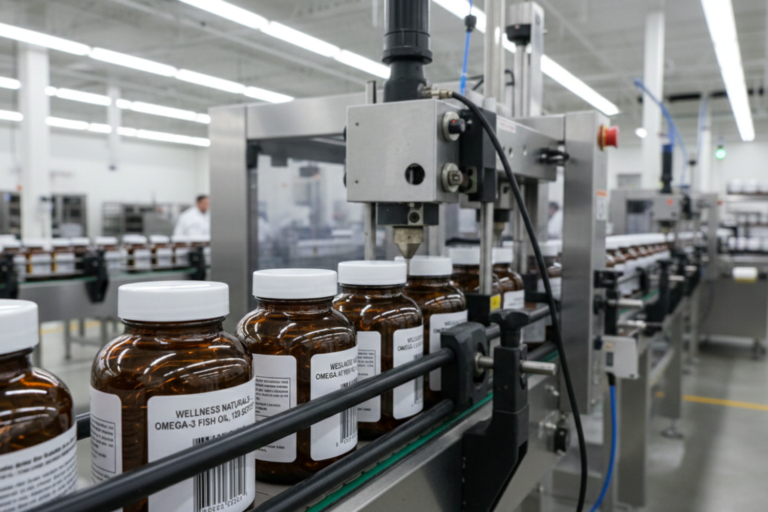
Private label supplements move fast, but speed cannot replace quality, safety, or trust. In the health and wellness industry, each finished product reflects directly on a brand, whether sales happen online, through a retail partner, or via a new product launch.
This article explains how to set batch-level testing rules so that private-label supplements are approved based on documented evidence rather than assumptions. Use the checklist, COA review rules, and simple QC scoring method below to protect customers, support regulatory alignment, and scale across vitamins, minerals, sports nutrition, and wellness products.
What “Every Batch” QC Means for Private Label Supplements
Every batch QC means documenting each production run and confirming that the required release checks are completed before finished products are released for sale. This applies across low Minimum Order Quantities (MOQs), large minimum orders, white-label supplements, and custom formulations.
A private-label supplement manufacturer can use a risk-based testing plan, but the release decision should be documented for every lot. The goal is consistent quality, safer outcomes, and clearer records that support audits, retailer requests, and brand protection as a product line grows.
Certificates of Analysis and Release Documentation
A Certificate of Analysis (COA) confirms that a specific batch was tested against defined specifications and links results to a lot or batch number for traceability. The COA should match the lot or batch number shown on purchase orders, labels, and packaging.
A strong COA typically includes:
- Tests performed and results
- Units and method references
- Pass or fail limits tied to product specifications
- Lot identifiers that match production and shipping records
Release means a batch is approved for sale only after results are reviewed, documented, and accepted. This approach aligns with dietary supplement cGMP expectations to maintain quality and confirm the product is packaged and labeled as specified.
In-House Testing and Third-Party Testing Roles
In-house testing helps manufacturers monitor quality during manufacturing and packaging using fast, routine checks. These checks support process control, especially for weight variation, blend uniformity indicators, and in-process specifications.
Third-party testing provides independent verification and clearer documentation for brand risk management. A combined approach often improves confidence in batch release decisions, especially for online sales, retail onboarding, and new market entry.

Batch Tests to Require Before You Approve a Run
Batch-level testing can help catch issues like contamination, inconsistent potency, and misalignment with label claims. Requiring a consistent test panel that matches product specifications reduces uncertainty and helps a supplement brand scale with fewer surprises.
Below are common test categories used in private label supplements. The right panel depends on formula risk, ingredient sourcing, claims, and channel requirements.
Potency and Label Claim Verification
Potency testing helps confirm that key actives align with label claims and internal specifications. This is especially relevant for vitamins, minerals, sports nutrition, and wellness formulas, where small shifts can change the serving-level amount.
Set clear target ranges for key actives and require each batch to meet those limits. This reduces variability and helps catch formulation drift early.
Microbiology Screen
Microbiology testing screens for bacteria, yeast, and mold that can affect safety and shelf stability. Powders, capsules, and gummies can pose different risks depending on moisture and processing conditions, so routine screening before release helps ensure safer, more consistent production across nutritional supplements.
Gluten and Allergen Controls
Gluten testing matters when labeling includes a gluten-free claim or when manufacturing occurs in shared facilities with cross-contact risk. FDA rules define gluten-free labeling with a threshold of less than 20 ppm gluten for FDA-regulated foods, including dietary supplements.
Allergen controls protect customers and reduce liability. Practical controls include documented line clearance, validated cleaning procedures, label verification, and targeted testing when the risk profile supports it.
Heavy Metals Panel
Heavy metals testing commonly screens for lead, arsenic, cadmium, and mercury. FDA and industry stakeholders frequently focus on these toxic elements due to ongoing exposure reduction efforts and monitoring.
Many brands and retail partners set internal limits for heavy metals, and some jurisdictions or programs may set additional expectations. Evaluate results against written specifications, not vague summaries. Detailed reporting also supports supplier reviews, internal thresholds, and defensible decisions during audits or partner evaluations.
Identity Testing for Key Raw Materials
Identity testing helps confirm that incoming dietary ingredients match specifications and reduces substitution risk, especially for high-cost actives and botanicals.
Dietary supplement cGMP rules include identity testing expectations for dietary ingredients before use, with limited exceptions under specific conditions.
These checks, completed before manufacturing begins, help prevent downstream failures and protect formulation integrity through blending, encapsulation, and packaging.
Contaminant Add-Ons for Higher-Risk Formulas
Some formulas call for additional contaminant testing based on ingredient risk and sourcing. Common add-ons include:
- Mycotoxins for certain plant-based inputs
- Pesticide residues for botanicals, depending on region and farming practices
- Residual solvents for ingredients produced using extraction processes
Risk-based add-ons protect safety without unnecessary cost by focusing resources where exposure is most likely
How to Read a COA Without a Science Background
A COA review does not require lab training. A repeatable process can catch most documentation issues quickly and keep batch release decisions consistent.
Use this review order for every lot:
- Confirm batch identifiers: Match the lot or batch number on the COA to the purchase order, label, and packaging.
- Confirm specs and pass or fail limits: Results should map to agreed specifications with clear pass or fail thresholds, not generic ranges.
- Confirm methods and units: Methods and units should remain consistent across batches, so results are comparable over time.
- Confirm traceability and sample details: Check sample ID, sample date, product description, and any notes so the COA clearly ties to the correct production run.
- Confirm basic lab credibility: Verify the lab name and contact details, report date, listed methods, and accreditation status or third-party testing option when applicable.

QC Red Flags When Vetting a Manufacturer
Quality control red flags usually show up as repeat patterns. As production volume increases, small gaps can turn into expensive problems.
- Irregular Testing Frequency: Testing described as “sometimes” signals weak controls. Reliable QC programs define batch testing rules upfront and apply them consistently.
- Missing Documentation or Slow COA Turnaround: Delayed or incomplete COAs often reflect weak internal systems. Slow delivery disrupts approvals, launch timelines, and retailer confidence.
- No Third-Party Testing Option: Exclusive reliance on in-house testing can limit defensibility. Independent testing adds credibility and reduces exposure during audits, disputes, or partner reviews.
- Hesitation Around Facility Transparency: Reluctance to share records, processes, or quality documentation is a warning sign. Quality programs should be supported by records, not verbal assurances.

Simple QC Scorecard for Private Label Manufacturers
A QC scorecard keeps manufacturer evaluations consistent by applying the same criteria across reviews. It supports internal accountability and creates clearer records for audits, disputes, and future sourcing decisions.
Before scoring, define point rules so every evaluator applies the same standards. Assign full points when evidence fully meets criteria, partial points when gaps are documented and manageable, and zero points when risk is unacceptable or documentation is missing.
Because quality failures carry the highest risk, testing coverage, COA quality, and transparency are often weighted more heavily than secondary operational strengths.
| QC Category | What to Evaluate | Full Points | Partial Points | Zero Points |
|---|---|---|---|---|
| Testing Coverage | Required batch tests are defined and consistently performed | All required tests completed for every batch | Some tests are inconsistent or limited | Testing undefined or irregular |
| COA Quality | Completeness, clarity, traceability, and pass or fail alignment | Clear, complete, traceable COAs delivered on time | Minor gaps or delays | Missing, unclear, or late COAs |
| Third-Party Validation | Use of independent labs for verification | Routine third-party testing used | Occasional third-party testing | No external validation |
| Change Control | Management of ingredient, supplier, or process changes | Formal change control with approvals | Informal or incomplete controls | No documented change control |
| Release Discipline | Products ship only after documented approval | Release only after QA sign-off | Exceptions documented | Product released without approval |
Using standardized categories like these keeps critical risks visible and simplifies comparisons across manufacturers over time.
Contract and PO Terms That Protect Batch Quality
Quality control works best when contracts and purchase orders enforce it. Strong written terms define testing requirements, documentation standards, and clear consequences for failure. This limits ambiguity, reduces disputes, and protects both parties when staff or processes change.
Batch Release Rules and Hold Policy
No product should ship without documented passing results tied to the correct lot. A written hold policy protects customers and brand integrity by setting a clear release gate before shipping, invoicing milestones, or retailer delivery windows.
Failure Response and Retest Process
Define investigation steps, corrective actions, and rework rules. Clear processes reduce delays and confusion. Predictability protects quality. It enables faster root-cause resolution, clearer ownership, fewer repeat failures, and greater confidence in approving corrected batches for release.
Documentation Access and Record Retention
Specify which records are provided, how quickly records must be delivered, and how long records are retained. Reliable access supports audits, retailer requests, and internal reviews.
Include terms that cover:
- COAs and supporting lab reports
- Batch production records and deviations, when applicable
- Complaint handling summaries when issues arise
- Retention timelines aligned to business and regulatory needs
Formula and Supplier Change Controls
Define how changes are handled before implementation. Change controls should cover ingredients, suppliers, specifications, processes, and packaging that can affect quality or label accuracy.
Strong terms often include:
- Advance notice requirements for changes
- Approval steps before production proceeds
- Documentation provided for the change rationale and risk assessment
- Clear rules for when retesting is required
How to Budget for Batch Testing
Batch testing budgets should be planned to control risk, prevent cost surprises, and support cGMP-aligned quality systems.
- Included testing versus add-on testing
Define baseline tests for every batch of health supplements and sports nutrition products. Use add-on testing only for higher-risk formulations, own brand products, or customer-driven requirements. - Cost drivers that change the testing price
Ingredient risk, formula complexity, turnaround time, and third-party labs all affect cost. Knowing these drivers improves forecasting and negotiation. - Batch testing cost controls that don’t reduce safety
Standardized specifications, consistent labs, and repeatable reviews control cost. Focus on process efficiency, not test removal, as supplement brands scale.
This structure supports safer launches, more transparent budgeting, and stronger partnerships while protecting finished products, customers, and long-term brand credibility.

Batch Testing Checklist for Your SOP
To ensure consistent quality control, standard operating procedures should clearly require the following steps for every production run:
☐ COA for every batch with traceability and pass or fail clarity
☐ Potency verification per batch, based on product specifications
☐ Microbiology testing per batch, based on product risk
☐ Gluten and allergen controls based on labeling claims and facility risk
☐ Heavy metals testing based on ingredient and channel risk
☐ Incoming identity checks for key dietary ingredients
☐ In-process blend checks, when applicable to the dosage form
☐ Release only after documented passing results
☐ Third-party testing access or defined verification pathway
☐ Written failure response and retest rules
☐ Change control terms for formula, supplier, and process changes
Ensure Batch Quality Without Slowing Down
Batch testing works when the process is enforced with clear documentation. Require the right tests for each run, confirm the COA matches the lot, and hold shipment until results meet written specifications.
Use the scorecard to compare manufacturers consistently and select a partner with a QC system that supports documented release decisions.
Frequently Asked Questions
What tests should private label supplements pass before they ship?
Many private label supplement brands require potency, microbiology, heavy metals, and identity verification as part of lot release. Allergen or gluten controls are commonly added when labeling claims apply or shared-facility risk is present.
Do private-label supplement brands require third-party testing for every batch?
Third-party testing is not legally required for every batch in all cases, but many brands use it to strengthen documentation for audits, partner reviews, and retailer onboarding.
What is a COA in supplements, and what should it include?
A COA documents batch test results and should include lot numbers, test methods, results, pass or fail limits, and lab report details tied to the specific batch.
How often should supplements be tested if I’m using the same manufacturer?
Many QC programs apply the same release requirements to each batch, even with the same manufacturer, to detect variability and maintain consistent quality over time.
What’s the difference between in-house testing and third-party lab testing?
In-house testing supports day-to-day process control during manufacturing. Third-party lab testing provides independent verification, which strengthens defensibility, documentation, and confidence in batch release decisions.
References
- Consumer Healthcare Products Association. (n.d.). Certificate of analysis for dietary supplements. https://www.chpa.org/public-policy-regulatory/voluntary-codes-guidelines/certificate-analysis-dietary-supplement
- Consumer Healthcare Products Association. (n.d.). FAQs about dietary supplements regulations. https://www.chpa.org/about-consumer-healthcare/faqs/faqs-about-dietary-supplements-regulations-0
- Office of Dietary Supplements, National Institutes of Health. (n.d.). Dietary supplements: What you need to know. https://ods.od.nih.gov/factsheets/WYNTK-Consumer/
- Food Labeling; Gluten-Free Labeling of Foods, 78 Fed. Reg. 48169 (Aug. 5, 2013). https://www.federalregister.gov/documents/2013/08/05/2013-18813/food-labeling-gluten-free-labeling-of-foods
- U.S. Department of Agriculture, Food Safety and Inspection Service. (2020). Microbiological sampling and testing. https://www.fsis.usda.gov/sites/default/files/media_file/2020-08/1-EIOA-Micro-Sampling-Testing.pdf
- Kenton, W. (2021). White label product. Investopedia. https://www.investopedia.com/terms/w/white-label-product.asp