Most custom supplement launches do not fail because of chance or market timing. When working with a contract supplement manufacturer, projects usually fail because inputs are incomplete, approvals arrive late, and the manufacturing timeline is treated as a single block instead of interdependent steps. That pattern makes delays costly to fix.
This article explains how to screen a contract supplement manufacturer before committing to production using a practical pre-purchase order checklist grounded in regulatory compliance and supplement manufacturing best practices.
Pilot Runs: What They Validate (and What They Don’t)
Pilot runs reduce risk only when the scope is clearly defined, especially in supplement contract manufacturing. For a contract supplement manufacturer, a pilot run does not guarantee scale readiness, cost efficiency, or long-term consistency. Instead, it serves as a controlled checkpoint to verify that a custom supplement formula behaves as expected during manufacturing. When misunderstood, pilot runs create false confidence instead of meaningful quality assurance.
Pilot Run Goals That Actually De-Risk the Launch
Pilot runs de-risk a launch by validating execution details that directly affect quality, safety, and consumer experience in dietary supplement manufacturing. These checks help ensure consistent production before a full production run begins.
Before approving the pilot, confirm that the following validation goals are explicitly included:
- Confirm blend performance and fill accuracy, including weight variation, flow behavior, and consistency across capsules, powders, or tablets
- Catch sensory issues early, such as taste, texture, or mixability for powders, gummies, or great-tasting formulas
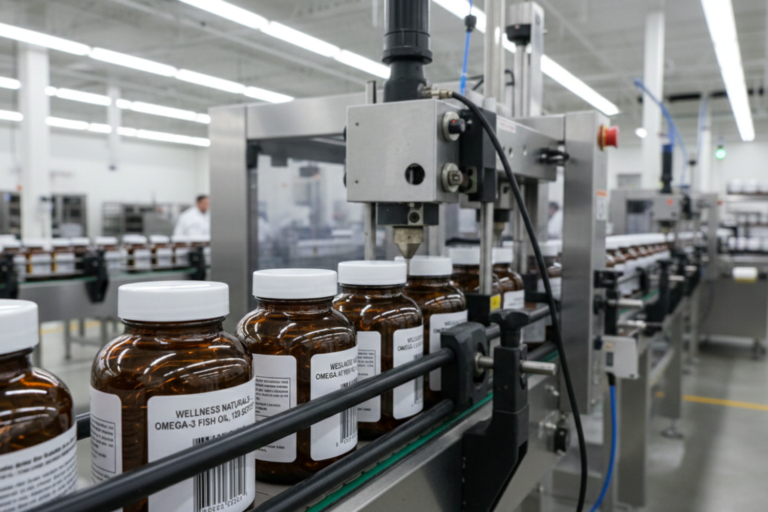
- Validate packaging execution, including bottle fit, label application, scannability, print quality, and packaging specifications
- Check basic handling stability, such as clumping, separation, or heat and humidity sensitivity, when relevant to organic or halal supplements
These checks help ensure the manufacturer produces high-quality products that meet rigorous standards and undergo proper quality control.
Pilot Run Deliverables to Request
Before the pilot begins, confirm and document the following with the contract supplement manufacturer:
- Ask for a clear sample retention plan, including how samples are labeled, stored, and tracked
- Confirm which batch documents you will receive, such as batch record summaries, deviations, if any, and quality sign-offs
- Lock the Certificate of Analysis (COA) plan in writing, including what is tested, when testing occurs, and who runs and reviews product testing
- Set simple pass, revise, or stop rules before production starts
Pilot Run Decision Rules
Keep pilot run decision rules simple and focused so the outcome is easy to act on:
- Pass means the batch meets the agreed specifications and quality thresholds
- Revise means one controlled change, adjusting only one variable at a time
- Stop applies to repeated misses, unclear root causes, or scope creep
Finally, confirm how revisions affect lead times so schedule impacts are clear before changes are approved.
Lead Times: Break the Timeline Into What You Can Control
Lead times only become manageable when they are broken into discrete, controllable steps instead of broad estimates. A contract supplement manufacturer quoting “six to eight weeks” is referring to multiple dependent phases in supplement manufacturing. Each phase has different inputs, risks, and approval gates that affect overall delivery. Mapping these steps allows brands to control decisions rather than react to delays.
Typical Timeline Stages to Map
Breaking lead times into stages creates visibility across manufacturing, testing, packaging, and logistics. These stages apply across dietary supplement industry workflows, whether producing capsules, powders, or tablets.
Key timeline stages to document include:
- Raw material sourcing and inbound receiving, including raw material sourcing documentation and supplier lead times
- Production scheduling and confirmed run windows within manufacturing facilities
- In-process quality control checkpoints tied to rigorous quality control measures
- Finished goods testing, stability testing, and COA release
- Packaging, labeling, and final quality assurance approval
- Freight pickup and delivery to a third-party logistics provider, Amazon, or a warehouse
Mapping these steps helps ensure consistent production and avoids surprises late in the process.
What Delays Timelines
Delays usually occur when inputs are incomplete or decisions are made midstream instead of up front. A contract supplement manufacturer can only hold schedules when specifications, approvals, and testing plans are locked early.
Delays often come from the following:
- Custom packaging components with long supplier queues
- Formula changes introduced after production scheduling
- Missing label approvals or late artwork submissions
- Additional rounds of testing requested during production
How to Buffer for Delays
Buffer planning allows brands to absorb variability without missing market windows. Simple rules keep buffers practical and easy to communicate.
A simple buffer rule helps manage risk:
- For first runs, build in extra time for approvals, learning curves, and quality verification
- For reorders, reduce buffers but still account for supplier variability and facility capacity
As a capacity reality check, avoid launching during peak manufacturing seasons without a confirmed slot, and plan backup options such as partial shipments or staggered deliveries if needed.
What to Confirm Before You Sign the Purchase Order
Most production delays occur because critical details were assumed instead of confirmed before the purchase order (PO) was signed. With a contract supplement manufacturer, unclear expectations for testing, change control, and release authority often lead to rework, additional costs, and schedule extensions.
This step converts assumptions into documented commitments. Treat it as the final checkpoint before contract manufacturing begins.
Quality, Testing, and Release Criteria
Quality expectations must be explicit to support regulatory compliance, consumer safety, and consistent finished products. These confirmations protect both the brand and the supplement manufacturer by aligning quality assurance responsibilities.
Before signing, confirm the following in writing:
- What is tested, including potency, microbiologicals, heavy metals, and allergens when relevant
- When testing occurs, such as incoming raw materials, in-process checks, and finished goods testing
- Who releases the batch, and exactly which documents will be provided, including the COA, release approval, and any deviation notes
Clear testing criteria support compliance with current Good Manufacturing Practices (cGMP) and applicable industry regulations.
Change Control and Rework Policies
Change control determines how flexible or disruptive revisions become during supplement production. A contract supplement manufacturer should define what qualifies as a change and how approvals are handled to protect quality and cost control. Without this clarity, even minor updates can create cascading delays. This step helps ensure accountability is shared and understood.
Confirm the following change control details before committing:
- What counts as a change, such as ingredient source updates, excipient substitutions, packaging swaps, or artwork revisions
- Approval workflows and turnaround times, including who signs off and how quickly decisions are made
- Cost responsibility assigned clearly, distinguishing between missing inputs on the brand side and manufacturing or production errors
Clear change policies help maintain consistency, protect margins, and ensure that the manufacturer remains a trusted manufacturing partner throughout development and production.

What Separates a Trusted Contract Supplement Manufacturer
Selecting a contract supplement manufacturer starts with enforcing rigorous standards that protect quality, compliance, and brand credibility. By confirming regulatory compliance, cGMP requirements, quality assurance practices, raw material sourcing, and stability testing before production, dietary supplement brands reduce risk across supplement manufacturing, packaging, labeling, and finished products.
This approach supports consistent, high-quality supplement products across capsules, powders, tablets, private label, sports nutrition, organic, and halal formulations while helping businesses bring safe, reliable products to market with confidence.
Frequently Asked Questions
When should I do a pilot run for a custom supplement?
You should do a pilot run with a contract supplement manufacturer before your first production run to validate the manufacturing process, quality control, packaging execution, and testing plans for your custom supplement formula.
How long do custom supplement lead times usually take for a first order?
First-order lead times with a supplement contract manufacturer typically take 6–12 weeks, depending on raw material sourcing, testing requirements, packaging, labeling approvals, and regulatory compliance steps.
What documents should a supplement manufacturer provide before production starts?
Before production, a supplement manufacturer should provide written specifications, batch records, testing protocols, Certificates of Analysis (COAs), quality assurance approvals, and confirmation of cGMP compliance and industry regulations.
Can a contract supplement manufacturer help with custom formulations?
Yes, a qualified contract supplement manufacturer can support custom formulations by guiding ingredient selection, raw material sourcing, testing requirements, and quality assurance while ensuring regulatory compliance and consistent supplement manufacturing outcomes.
Is a pilot run required for private label supplements?
A pilot run is not always required for private-label supplements, but it is recommended when using new suppliers, packaging, or specifications to confirm quality control, production consistency, and finished-product standards before full-scale manufacturing.
References
- Consumer Healthcare Products Association. (n.d.). Certificate of analysis for dietary supplements. https://www.chpa.org/public-policy-regulatory/voluntary-codes-guidelines/certificate-analysis-dietary-supplement
- Consumer Healthcare Products Association. (n.d.). FAQs about dietary supplement regulations. https://www.chpa.org/about-consumer-healthcare/faqs/faqs-about-dietary-supplements-regulations-0
- Investopedia. (n.d.). Lead time. https://www.investopedia.com/terms/l/leadtime.asp
- National Institutes of Health, Office of Dietary Supplements. (n.d.). Dietary supplements: What you need to know. https://ods.od.nih.gov/factsheets/WYNTK-Consumer/
- United States Pharmacopeia. (n.d.). USP verified mark. https://www.usp.org/verification-services/verified-mark
- U.S. Food and Drug Administration. (n.d.). 21 CFR Part 111—Current good manufacturing practice in manufacturing, packaging, labeling, or holding operations for dietary supplements. https://www.ecfr.gov/current/title-21/chapter-I/subchapter-B/part-111