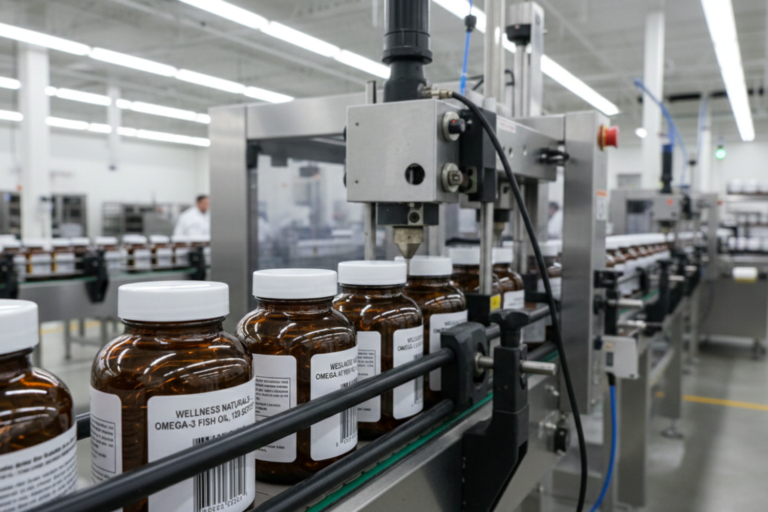
GMP-certified supplements are common, but a Good Manufacturing Practice (GMP) certificate on the wall does not always reflect how a manufacturer operates day to day. Many manufacturers pass an audit and later shift toward what the supplement industry often calls paper GMP, where quality, testing, and record keeping weaken once inspections end. This article explains how to distinguish companies that have achieved certification from those that practice GMP throughout production.
This guide uses the Inventory Ready evaluation framework to show how safety and quality are protected inside real manufacturing facilities. Brands that work with partners that follow GMP regulations reduce product recalls, prevent mix-ups, and protect consumers from contamination. Knowing how to verify compliance with true GMP standards helps decision-makers make informed choices before placing an order.
Why Business Tenure Is the First Test of True GMP Adherence
Business tenure is an early indicator of true GMP adherence because only long-operating manufacturers have proven they can maintain compliance, inspections, and quality controls over time. Longevity shows a manufacturer can sustain the ongoing costs of testing, documentation, and certified staff without cutting corners.
Minimum of Five Years in Operation as a Stability Baseline
Five years of operation is often used as a baseline to indicate that a company has maintained GMP-certified facilities across multiple inspection cycles. This demonstrates that a manufacturing process can handle evolving GMP regulations that mandate updates. New firms may still be building the systems needed to consistently produce supplements.
Long-standing operations are also better prepared to manage product complaints and product recalls. Experience helps prevent repeated safety failures. That track record builds confidence for brands that sell food and dietary supplements.
Financial Ability to Sustain Costly Quality Control
Real GMP compliance requires steady investment because testing, documentation, and certified staff carry ongoing costs. Purity testing, potency checks, and monitoring for banned substances add financial pressure. A manufacturer without stable revenue may reduce these safeguards.
When a company can afford both NSF certification and GMP registration, it demonstrates a deeper commitment to product safety. NSF-certified facilities are verified through regular audits. That additional expense helps filter out risky contract manufacturers.
Refined Standard Operating Procedures Developed Over Time
Strong standard operating procedures are built through years of real production, not a single audit. These systems keep raw materials, testing, and production aligned with industry best practices. Without mature controls, contamination and labeling errors become more likely.
Veteran manufacturers develop workflows that improve traceability and reduce mix-ups. This lowers error rates for sports nutrition, amino acids, vegan greens, and red superfoods. Over time, these habits support consistent and reliable manufacturing practices.

Going Beyond the Certificate to Verify Active Compliance
A GMP certification is only the starting point for evaluating real-world compliance. Many companies display certificates while ignoring daily compliance duties. Reviewing deeper records helps determine whether a facility truly adheres to GMP standards. This reduces costly mistakes and supports product safety.
Reviewing Full Third-Party Audits Not Just Certificates
Audit reports explain how manufactured products are monitored and tested. These documents outline how testing, record-keeping, and equipment verification are handled. A certificate alone does not reveal weaknesses.
Full reports identify gaps in process and facility controls. These details help brands avoid risky partners. Transparency supports long-term quality.
Checking FDA Databases for Recent Warning Letters or 483s
The Food and Drug Administration, or FDA, publishes inspection results online. Warning letters and 483 reports identify where a facility failed to comply with GMP regulations. Ignoring these records jeopardizes supplement safety.
A clean FDA record suggests that recent inspections did not result in formal enforcement actions. This reduces the risk of inventory seizures or forced shutdowns. It also protects a supplement brand from legal exposure.
Validating the Accreditation Status of the Certifying Body
Not all groups that issue GMP certifications use the same standards. Legitimate auditors are accredited and recognized across the industry. Weak certifiers undermine safety and quality.
Brands should verify whether a certifier is accredited by recognized programs such as NSF or comparable industry bodies. NSF certification improves consumer confidence and supports compliance. That extra layer reduces risk.

How Leadership Expertise Influences Manufacturing Culture
Leadership shapes manufacturing culture by setting expectations for GMP compliance, especially during high-volume production. When leadership prioritizes quality over speed, shortcuts are less likely, reducing contamination and recall risks.
Science Focused Leadership Prioritizing Safety Over Speed
Executives with technical experience understand testing requirements and potency verification. These leaders know why purity testing matters for dietary supplements. Decisions support safety even when timelines tighten.
This approach reduces errors across manufacturing facilities. It keeps product safety ahead of profit. Brands benefit from that stability.
Authority of Quality Assurance Teams to Halt Production
Quality assurance teams must be able to halt the manufacturing process when issues arise. This prevents unsafe batches from being released. That authority protects consumers. It also ensures corrective actions are taken before problems escalate across production runs.
Without this power, defects spread quickly and lead to product complaints. Strong QA teams are essential for GMP compliance.
Commitment to Continuous Employee Training and Education
Staff training keeps industry best practices active. Employees who understand good manufacturing practice make fewer mistakes. This improves traceability and reduces contamination. Consistent training also helps teams respond correctly to process changes and audit requirements.
Ongoing education also supports certification renewals. Well-trained teams strengthen quality standards.

Physical Signs of GMP Habits During a Facility Tour
During a tour, these visible signs show whether a facility practices GMP every day:
- Clearly labeled quarantine zones for incoming raw materials
- Real-time record-keeping logs that are not filled in later
- Clean facility air vents and controlled airflow
- Proper gowning and hygiene stations
- Segregated production and storage areas
- Secure testing and sample retention rooms
These cues indicate whether products are manufactured in accordance with industry standards on a daily basis.
Rigorous Testing in Validating GMP-Certified Supplements
Testing is the strongest proof that a company delivers GMP-certified supplements. Strong testing programs protect against weak potency, banned substances, and contamination. It confirms whether manufactured supplements meet quality and safety targets.
In-House Versus Third-Party Laboratory Verification
In-house labs provide fast checks while third-party labs provide independent confirmation. Both together support product safety. NSF-certified facilities commonly use external verification as part of quality programs.
This layered approach strengthens compliance and supports long-term trust.
Consistency in Certificate of Analysis Documentation
Certificates of Analysis confirm that each batch met quality standards. These records track potency, purity, and test results. Missing or inconsistent documents signal risk.
Strong documentation supports traceability. It also helps prevent product recalls.
Identity Testing Protocols for All Incoming Raw Materials
Every shipment of raw materials should be verified. Identity testing confirms that ingredients match labels. This prevents dangerous mix-ups.
These controls protect supplement safety. These steps also meet GMP regulatory requirements.

Securing Your Supply Chain With True Manufacturing Partners
True partners do more than display a certificate. These organizations adhere to GMP-certified principles in every process, audit, and production run. This discipline protects brands and consumers.
Choosing GMP-compliant, NSF-certified, and transparent manufacturers reduces legal risk and improves product safety. This approach helps brands protect trust across the supplement industry.
Frequently Asked Questions
What does GMP certified mean for dietary supplements?
GMP certified means dietary supplements are produced in facilities that follow Good Manufacturing Practice rules for safety, quality, testing, and record keeping.
How can I verify whether a supplement manufacturer is FDA-registered?
A supplement manufacturer can be verified by searching the FDA registration and inspection database for the facility name and address.
Why is cGMP important for supplement brands?
cGMP matters because it sets expectations for consistent production, testing, and quality control in supplement manufacturing.
Can a manufacturer lose GMP certification?
A manufacturer can lose GMP certification if audits, inspections, or compliance reviews show failures in quality systems, testing, or documentation.
What is the difference between GMP and cGMP?
cGMP refers to current Good Manufacturing Practice, which reflects the most current regulatory expectations
References
- International Society for Pharmaceutical Engineering (ISPE). (n.d.). What is GMP? https://ispe.org/initiatives/regulatory-resources/gmp/what-is-gmp
- National Institute of Standards and Technology (NIST). (n.d.). Dietary Supplement Laboratory Quality Assurance Program (DSQAP). https://www.nist.gov/programs-projects/dietary-supplement-laboratory-quality-assurance-program-dsqap
- National Institute of Standards and Technology (NIST). (n.d.). Statistics and reference materials for foods and dietary supplements. https://www.nist.gov/programs-projects/statistics-food-and-supplement-srms
- NSF International. (n.d.). What is NSF certification? https://www.nsf.org/knowledge-library/what-is-nsf-certification
- U.S. Food and Drug Administration. (n.d.). Current good manufacturing practice in manufacturing, packaging, labeling, or holding operations for dietary supplements (21 CFR Part 111). https://www.ecfr.gov/current/title-21/chapter-I/subchapter-B/part-111
- World Health Organization. (n.d.). Good manufacturing practices (GMP). https://www.who.int/teams/health-product-policy-and-standards/standards-and-specifications/norms-and-standards/gmp