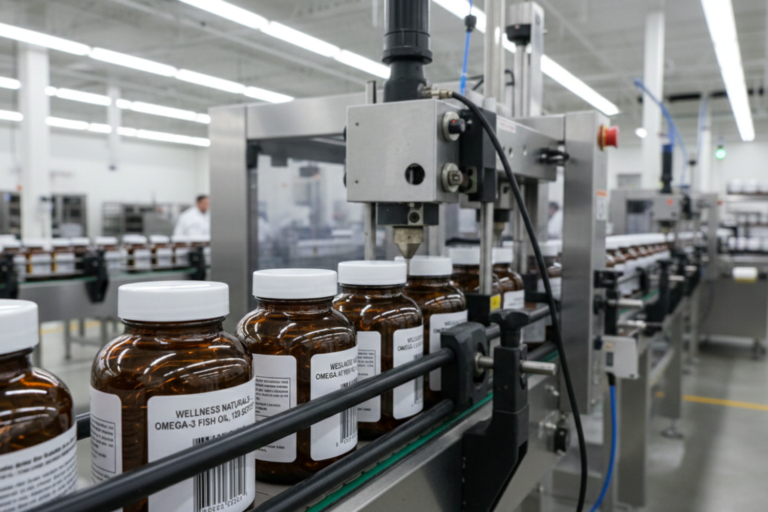
A virtual tour is one of the fastest ways to verify whether a white-label supplements partner is real, organized, and committed to quality. This guide explains what to expect, what missing details can signal, and how to apply a simple scoring mindset from the Choosing the Right Manufacturer checklist before any commitment. For brands sourcing white-label supplements, early visibility reduces risk before a purchase order is placed, custom formulations are shared, or a brand name appears on finished products.
Whether the goal is to sell private label supplements online, launch a new brand, or expand a product line with vitamins, capsules, tablets, or sports nutrition, a virtual tour helps confirm that a supplement manufacturer can deliver high-quality supplements that meet quality standards, applicable Food and Drug Administration (FDA) requirements, and long-term business goals.
Why Virtual Tours Matter for White Label Buyers
Virtual tours matter because white-label sourcing moves quickly, making early verification essential. A virtual tour is not a highlight reel; it is a credibility check that shows whether a supplement manufacturer has basic operational discipline in place before money, labels, or packaging change hands. When a facility can demonstrate clean flow, precise controls, and real-time proof, it reduces guesswork and helps brands eliminate poor-fit suppliers early.
For supplement brands focused on growth, safety, and building a successful brand, virtual tours protect customers, finished products, and long-term brand success. They also help confirm whether a partner can support low minimum order quantities (MOQs), reliable stock levels, and scalable production without cutting corners.
Checklist for Facilities of White Label Supplements
A virtual tour works best when you treat it like a practical scorecard, focusing on observable evidence rather than reassurance. The goal is not perfection, but consistency, control, and repeatability across manufacturing, packaging, and shipping. Use the sections below to guide what you should expect to see when evaluating white-label supplement manufacturers.
Facility Basics
Facility basics confirm whether the operation is legitimate, organized, and aligned with the paperwork and public claims:
- Facility name and address match the paperwork on file
- Visible visitor rules, personal protective equipment (PPE) use, and sign-in process
- Clean, controlled entry with professional staff flow
These basics indicate whether the manufacturer treats access, safety, and identity seriously across business and manufacturing operations, including staff behavior, visitor controls, documentation accuracy, and facility discipline.
Materials Control
Materials control shows how raw ingredients for nutritional supplements are received, tracked, and protected before manufacturing:
- Documented receiving and quarantine process
- Basic lot coding and traceability for ingredients
- Clear storage discipline with labeled zones and first-in, first-out (FIFO) practices where relevant
Strong materials control reduces mix-ups, supports traceability, and protects quality across white-label supplements and private-label products as volumes scale and product lines expand.
Production Controls
Production controls reveal whether the facility can prevent errors during manufacturing and contract manufacturing workflows:
- Logical process flow that prevents mix-ups
- Visible cross-contamination barriers and sanitation steps
- Line clearance steps explained in plain language
A clear production flow supports repeatability and reduces risk as order volume, stock levels, and market demand increase.
Quality Proof
Quality proof shows whether quality checks actually occur, not just whether they are mentioned in sales calls:
- In-process checks tied to the product type, such as weights, fills, and blend checks
- Clear explanation of where testing happens, such as in-house laboratories or third-party laboratories
- Certificate of Analysis (COA) workflow and what COAs verify, including identity, purity, and potency when applicable
Visible quality proof supports confidence that finished products meet quality standards and regulatory expectations for dietary supplements.
Packaging & Shipping
Packaging and shipping areas confirm whether finished products are handled with care, accuracy, and control:
- Label version control and secure label storage
- Batch and expiration coding process
- Organized outbound staging and damage-prevention steps for shipping
These steps protect label accuracy, reduce fulfillment errors, and support customer trust for online sales and marketplace distribution.
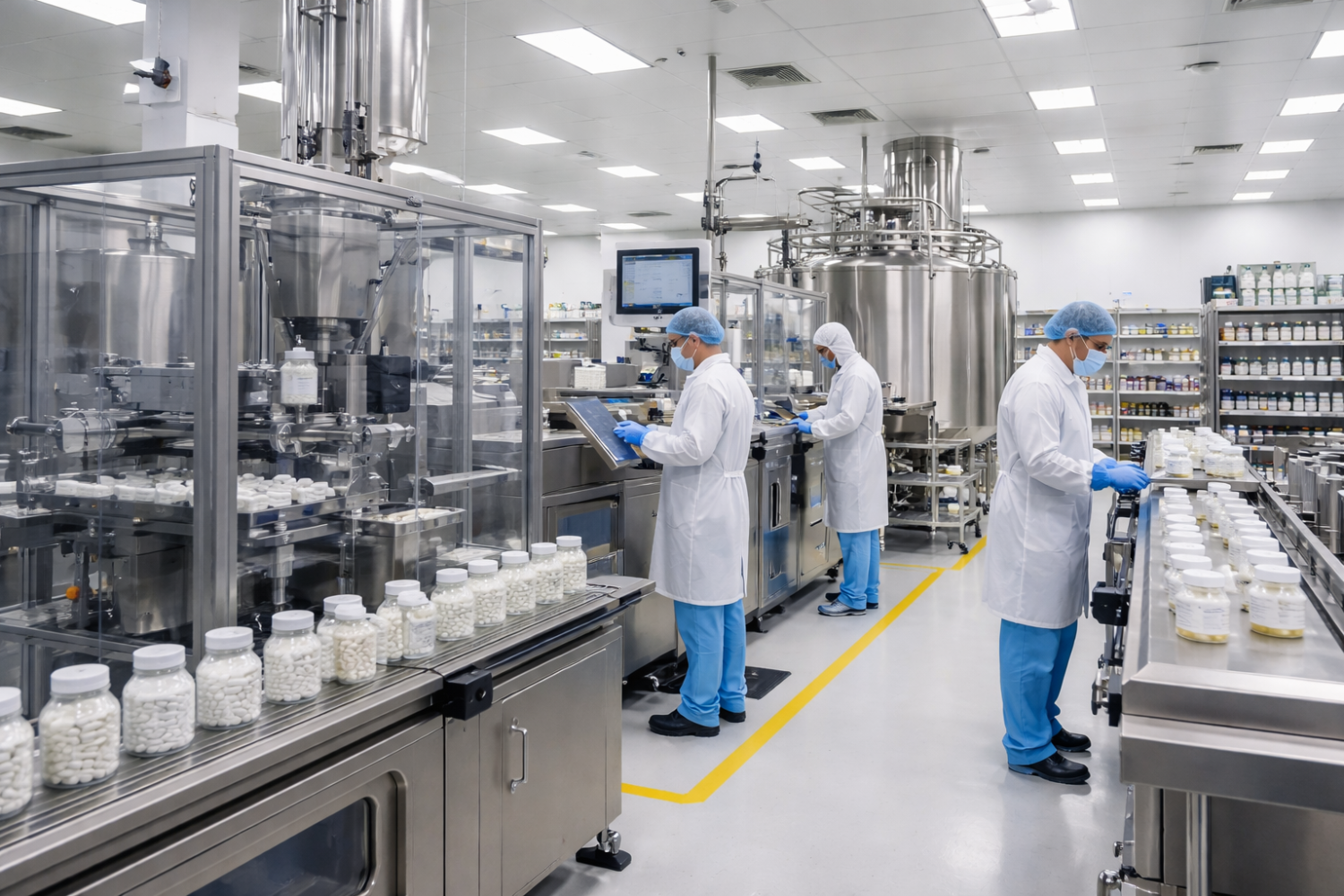
What a Refusal to Tour Often Signals (And What to Do Next)
A refusal typically increases risk and should affect your scoring of the manufacturer. Treat refusal as a signal of transparency rather than an automatic rejection. The reason for the refusal matters to your brand, your business, and your customers.
Security and NDA Concerns
Security or non-disclosure agreements (NDAs) may limit visibility into intellectual property, proprietary formulas, or client privacy, especially for custom formulations and unique formulas tied to a supplement brand’s success. However, a reliable white-label supplements partner should still offer alternatives such as partial tours, recorded walkthroughs, or controlled views of manufacturing, packaging, and quality areas.
A complete refusal without options increases uncertainty, weakens trust, and raises concerns around transparency, contract manufacturing practices, and alignment with FDA regulations and internal quality standards.
Disorganization or Lack of Control
Some facilities avoid tours because processes are unstable or inconsistently compliant. Disorganized spaces, unclear workflows, poor labeling discipline, or weak housekeeping often surface during walkthroughs. Avoiding tours can signal operational weaknesses that affect product quality, safety, and scalability.
These issues commonly lead to labeling errors, batch mix-ups, delayed testing, and inconsistent documentation, increasing risk for white-label and private-label supplements, finished products, and growing product lines as order volume, low MOQs, and market demands expand.
Compliance or Reputation Risk Management
Facilities with unresolved compliance issues may restrict access to avoid exposure. This may include past FDA findings, corrective actions, or internal quality gaps. Limited transparency here should trigger a deeper review and additional proof requests.
Brands should treat this as a risk signal and require updated audit summaries, corrective action timelines, and verification that all deficiencies have been fully resolved before proceeding.
Outsourced Production: They Don’t Want Visible
In some cases, the company presenting the tour is not the actual manufacturing site. Brokering or subcontracting without disclosure creates risk for white-label, private-label, and own-brand products.
Transparency should include where white-label supplements are produced, packaged, labeled, and shipped, along with confirmation of the actual supplement manufacturer, contract manufacturing partners, quality controls, and regulatory compliance responsibilities.
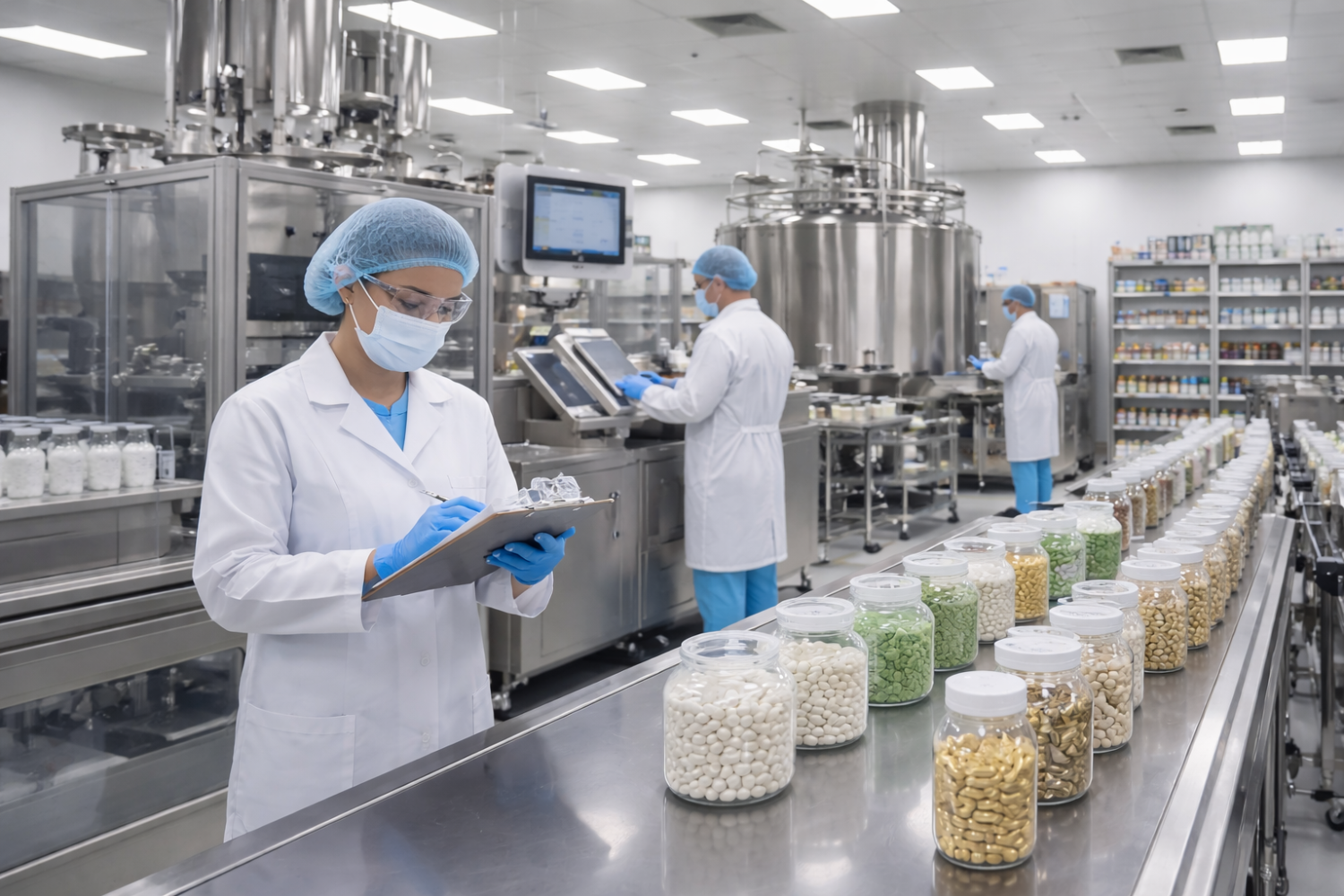
If They Won’t Tour, Ask for Proof Instead
When a virtual tour is not possible, request a focused proof package for quick review. These materials help replace visual confirmation with documented evidence. Each item should be recent, relevant, and tied to real production.
Request the following:
- Current Good Manufacturing Practices (cGMP) proof: Current documentation and relevant certifications that show cGMP-based systems are in place.
- Recent COAs: Sample Certificates of Analysis from recent batches that demonstrate identity, purity, potency, and relevant specifications.
- High-level standard operating procedure (SOP) summaries: Summaries for sanitation, label control, deviations, and batch records that show how routine work is managed.
- Audit evidence: Recent third-party audit summaries and associated corrective actions.
- Traceability example: One batch traced from raw ingredient lots to finished goods, including documentation checkpoints along the way.
These proofs confirm that systems exist, are used in practice, and align with claims made during sales conversations.

Treat the Tour as a Trust Test, Not a Bonus
A strong white-label partner welcomes verification because it protects both parties and reinforces accountability across the entire manufacturing process. When the virtual tour is clear, complete, and consistent with documentation, it signals a supplement manufacturer capable of delivering high-quality supplements that meet quality standards, applicable FDA requirements, and business goals.
If the tour is blocked, limited, or vague, slow down, request concrete proof, and score the risk honestly before committing your brand, own label, packaging, finished products, product line, and customers in competitive supplement markets.
Frequently Asked Questions
What should a white-label supplements virtual tour include?
A virtual tour should show production areas, materials control, quality checks, packaging, and shipping processes, with clear, real-time explanations of how each area operates.
Is it normal for a supplement manufacturer to refuse a virtual tour?
It can happen, especially in settings with strict security, NDAs, or shared facilities. A refusal increases risk and should trigger requests for alternative proof, such as partial tours, recorded walkthroughs, or documented quality evidence.
What documents should I request if they will not offer a tour?
Request cGMP documentation, recent COAs, high-level SOP summaries, audit evidence, and a traceability example that follows one batch from raw ingredients through finished goods.
How do I verify cGMP compliance for white-label supplements?
Ask for current cGMP documentation, recent audit summaries, and evidence that procedures described in SOPs are followed in practice, such as completed batch records and deviation reports.
What testing should I expect for white-label supplement batches?
Testing should cover identity, purity, potency, and safety appropriate to the product type and formulation. The manufacturer should explain which tests are performed in-house, which use third-party laboratories, and how COAs are managed.
References
- Kenton, W. (n.d.). Non-disclosure agreement (NDA). Investopedia. https://www.investopedia.com/terms/n/nda.asp
- Kenton, W. (n.d.). White label product. Investopedia. https://www.investopedia.com/terms/w/white-label-product.asp
- National Institute of Standards and Technology. (n.d.). Certificate of analysis: SRM 3284 (Fat-Soluble Vitamins and Carotenoids in Human Serum). https://tsapps.nist.gov/srmext/certificates/3284.pdf
- Nutrition.gov. (n.d.). Dietary supplements. U.S. Department of Agriculture. https://www.nutrition.gov/topics/dietary-supplements
- U.S. Department of Labor, Occupational Safety and Health Administration. (n.d.). Personal protective equipment. https://www.osha.gov/personal-protective-equipment
- World Health Organization. (n.d.). Good manufacturing practices (GMP). https://www.who.int/teams/health-product-policy-and-standards/standards-and-specifications/norms-and-standards/gmp